Pages

Showing posts with label Africa. Show all posts

Wednesday, January 18, 2012

On Topic around the Web


Everybody learns in different ways (or at least that's how my Algebra teacher used to console me). So while some people seeking to understand non-citizen issues may be best served by a dry and factual NGO report, others may get the picture better from an evening news piece, a politician's rant, or a short story. Here are a few interesting pieces on non-citizens that may be worth a read or a look to round out your knowledge. 

McSweeney's has a fantastic series of articles by an anonymous "Bible-college educated evangelical" Christian who decided to try out her missionary skills on a group of Somalian refugees in Portland. The resulting tales are funny and often heartbreaking, drawing a comparison between people trying to adjust to a entirely new way of life, and those among us who feel like outsiders wherever they are.
Assimilate or Go Home: Dispatches from the Stateless Wanderers by DLM

Aleksander Hemon, author of several books about the immigrant experience including the bitter and beautiful novel "The Lazarus Project," has a piece out in Guernica Magazine this month about ethnic education in Bosnia and Herzegovina. This look at how the "ridiculous and demeaning" peace-process has played out in the classroom offers a cutting intro into a complex and fascinating subject.
National Subjects by Aleksander Hemon

Surprising Europe, a series from Al Jazeera, has some great pieces covering the experience of African Migrants in Europe. The episode below is especially salient, about undocumented migrants in Berlin and Amsterdam trying to live inside the paper maze.
Running out of Luck- Surprising Europe

And last but not least, below is a video by the Serbian NGO Praxis (whom I work with) regarding the situation of the legally invisible in Serbia.


Wednesday, November 30, 2011

South Africa: Legal Changes Hurt Asylum Seekers

It's another case of a huge backlog of asylum seekers persuading the government to make decisions that are not well thought out.

South Africa has a huge number of asylum seekers- UNHCR estimates just under 230,000- most of whom originate from Zimbabwe, supplemented by others from the Great Lakes region and the Horm of Africa. Starting in 2009, (perhaps overwhelmed by the numbers) the South African government took a generous policy towards Zimbabweans fleeing Mugabe's regime. Under a "special dispensation," refugees were entitled to remain in S.A. for 6 months, seek employment, and take advantage of educational and healthcare opportunities while their asylum applications were being processed, all without any form of documentation. (Although the dispensation was designed to assist Zimbabweans, as you might be able to guess, the "no documents" feature enabled a range of different nationalities to take advantage of the law.)

Now the government is back-tracking, concerned that economic migrants are abusing a system designed to protect "real" refugees. The department of Home Affairs has resumed deportations, and in the following weeks they will launch an inquiry to the minimum rights asylum-seekers are entitled to, and likely lift the dispensation for Zimbabweans as well as block rights to education and employment. The result could be thousands of asylum seekers in legal limbo, awaiting the outcome of their asylum application while unable to work or study. These developments, in conjunction with harsh announcements from the government and the closing of two refugee facilities, seems to signal a shift towards a harsher asylum regime in South Africa. As one government spokesman stated:
"South Africans must feel safe. If we're not able to control our illegal immigration, people won't feel safe."
It is understandable that providing education and/or employment for thousands of refugees is a costly measure. But the opposite can be ultimately be more expensive: thousands of individuals awaiting the outcome of their claim, turning to begging, crime, or black market employment to make ends meet. Which option do you think is safer for the people of South Africa? And in the event that the move forces massive returns to Zimbabwe as some fear it might, there is the question of whether S.A. is meeting its treaty obligations, particularly as pertains to non-refoulement.

In the end, the real question for South Africa is: is there a middle ground between all or nothing for Zimbabwe's asylum seekers?

Friday, October 14, 2011

Nubians in Kenya- New Case on Birth Registration

Nubian family, ca. 1940, via Nubians in Kenya

There has recently been a very interesting case to come out of Africa that deals with the persistent refusal of the Kenyan government to recognize the nationality of a minority group that has been present in the country for almost a century. The case, Nubian Minors v. Kenya, was brought to the African Committee of Experts on the Rights and Welfare of the Child (ACERWC) by the Institute for  Human Rights and Development in Africa along with the Open Society Justice Initiative. The ACERWC is an institution that deals with interpreting and deciding on issues related the OAU's African Charter on the Rights and Welfare of the Child, Africa's answer to the Convention on the Rights of the Child.

Like the CRC, the African Charter provides explicit nationality and legal personality rights for children. Article 6 requires that every child is entitled to a name, a nationality, and birth registration. Further, children who would otherwise be stateless are entitled to the nationality of the country in which they are born. The Nubian Minors case was brought under these provisions, along with the non-discrimination clause and several other collateral clauses.
Nubians from KAR

The Facts
The story of the Nubians of Kenya is old and interesting. Apparently, this group came from the Nuba mountains in present-day Sudan, and were forcibly conscripted by the British in the 19th century into the King's African Rifles. After service, they requested to be sent back to Sudan, but were instead allocated land in Kenya, namely, Kibera, right outside of present-day Nairobi. Next best thing, right? Wrong.

Now here is the tricky part: having been moved to Kenya, most of these people held no Kenyan citizenship. The British also refused to grant citizenship. At the time of Kenyan independence, in 1963, nothing about the Nubians was settled- they were still considered aliens by the government, who also refused to recognize Nubian title to the Kibera settlement. To make matters worse, these status problems were passed by the Nubian Kenyans down to their children. It is allegedly difficult in Kenya to register children in the absence of the parent's identity documents (which as we know, many people of Nubian descent do not possess.) And other human rights organizations have noted discriminatory practices in birth registration, such as refusing to issue a birth certificate. Further, children in Kenya do not receive proof of citizenship until the age of 18, at which point many children of Nubian descent find the fairly straight-forward procedure to verfiy their nationality complicated by discriminatory procedural barriers and delays. The result? Generations of legally invisible and de facto stateless people.

The Case
After considerable efforts to obtain remedies at the state level (see section 15-22 of the Decision) the applicants were able to have the case heard on the merits. The first issue the Court considered is whether the ACRWC grants citizenship from birth. While the reading of art. 6(1) doesn't provide a right from birth, taking into consideration the best interests of the child principle, this is a logical reading. Further, statelessness is particularly devastating for children.
Whatever the root cause(s), the African Committee cannot overemphasise the overall negative impact of statelessness on children. While it is always no fault of their own, stateless children often inherits an uncertain future. For instance, they might fail to benefit from protections and constitutional rights granted by the State. These include difficulty to travel freely, difficulty in accessing justice procedures when necessary, as well as the challenge of finding oneself in a legal limbo vulnerable to expulsion from their home country. Statelessness is particularly devastating to children in the realisation of their socio-economic rights such as access to health care, and access to education. In sum, being stateless as a child is generally antithesis to the best interests of children. (at 46)
 Having said that, the Committee considered several possible arguments by Kenya. First, the fact that some Kenyans of Nubian descent had acquired citizenship through the normal legal procedure. The Committee considered that this did not destroy the central argument, that a significant portion had not, which would be enough to violate their obligation. Second, Kenya could have argued that the Nubian children may be entitled to Sudanese citizenship. In this case, the Committee responded, the government could have tried to cooperate with Sudan to facilitate such granting of nationality, but there was no evidence that they had done so (at 51). In sum, they had violated their obligation to provide children with nationality, birth registration, and to help them avoid statelessness, all in violation of the key provisions of Article 6.

As to the discrimination claim under ACRWC art. 3, the Court found prima facie discrimination. The government's absence made it impossible for them to meet the burden of proof with evidence that the discrimination served a legitimate end, however the Court looked for explanations, and in the end relied on findings by the Kenyan National Commission on Human Rights, that  
“the process of vetting… Nubians… is discriminatory and violates the principle of equal treatment. Such a practice has no place in a democratic and pluralistic society” (at 56)
 In the subsequent paragraphs the Court found that these violations also deprived the Kenyan children on Nubian descent of their right to health and their right to education. In other words, positive findings on all fronts for the applicants.

Follow Up
Of course, it remains to be seen what the impact of the case will actually be on affected communities. Kenya was instructed to come up with an implementation plan, which would have to include some legal mechanisms to register extant stateless minor  Nubians as Kenyan, as well as a method of birth registration and subsequent acquiring of citizenship that is non-discriminatory and functioning.

In the meantime, lawyers have some excellent new case-law. This case speaks to, specifically:
  • the fact that statelessness is not "in the best interests of the child"
  • the link between birth registration and preventing statelessness
  • the impact of statelessness and legal invisibility on the ability of a child to access his health and education rights
  • additional barriers to birth registration and citizenship on the basis of ethnicity/ origin of parents can constitute discrimination.
All in all a big win, and a situation that lawyers interested in statelessness and legal invisibility will definitely want to keep an eye on.

You can read more on the case here: Open Society Justice Initiatives- Nubian Minors v. Kenya
And for a cool multi-media website on Kenya's Nubians, check out this online exhibit by Greg Constantine: Kenya's Nubians- Then and Now

Tuesday, October 11, 2011

Non-Citizen News Round Up

Photo by Sandy Huffaker for the NY Times
US: Programs aimed at helping settled refugees to start their own farms are gaining traction across the country, as well as making farmer's market offerings more diverse.
When the Uprooted Put Down Roots (via the NY Times)

Australia: UNHCR endorses the controversial Malaysian refugee swap deal? According to this article, the High Commissioner feels refugees are better off in Malaysia, where at least they can work.
Australia's Malaysia Refugee Swap Deal Gets Support from UNHCR (via All Headlines News)

Cuba: Numbers of emigrants going up, likely due to stalling economy
Number of Cuban Migrants Has Surged in 2011 (via Miami Herald)

Mozambique: UNHCR will follow up last years program of mapping and documenting statelessness with a program this year to register Mozambique-born stateless persons. An estimated 2 million people are at risk.
UNHCR to Support Registration of Stateless People (via All Africa Global Media)

Norway: As "paperless" youth gain increased intention in Norway, some are calling for the revival of the Nansen Passport.
Effort Grows to Revive Nansen Passport (via Norway International Network)

Wednesday, September 15, 2010

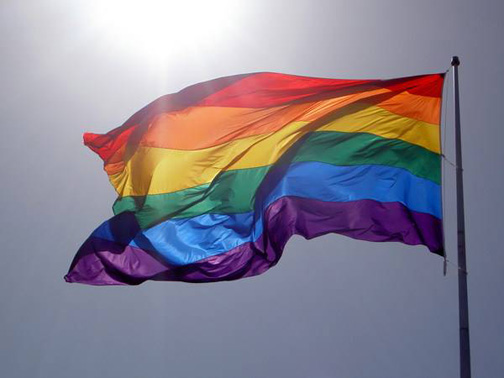
LGBQT Asylum Part 1- a good fit under "particular social group?"


As states like Uganda pass restrictive measures against gays and lesbians, and countries all over the world continue to harass people that dare to be openly transgendered or gay, it is worth asking whether the 1951 Refugee Convention accommodates LGBQT asylum claims. My opinion? It should, easily, but the practices of receiving states vary, and often reflect their ambivalence with their own LGBQT populations.

"Particular Social Group"
The most vague group protected under 1951 Convention’s refugee definition is “member of a particular social group.” In recent years it has been invoked as a basis of asylum by a range of people both successfully and unsuccessfully, including but not limited to, victims of Female Genital Mutilation (See: Mohammed v. Gonzales, 400 F.3d 785 (9th Cir. 2005)), ex-gang members (see: INS v. Elias-Zacarias, 502 U.S. 478 (1992)), the disabled , and a range of LGBT individuals. But what exactly does this phrase mean?

The Refugee Convention Handbook states, “a ‘particular social group’ normally comprises persons of similar background, habits or social status. A claim to fear of persecution under this heading may frequently overlap with a claim to fear of persecution on other grounds, i.e. race, religion or nationality (77)." As this definition indicates, the “social group” category is rather broad. The travaux preparatoires is scarcely more helpful. “In the first place, experience had shown that certain refugees had been persecuted because they belonged to particular social groups.  The draft Convention made no provision for such cases, and one designed to cover them should accordingly be included (14)” With so little elaboration, it is difficult to determine what exactly was contemplated at the time of the group’s inclusion within the 1951 Convention.

However, it's at least possible, if not probable, that persecution for reason of sexual orientation could have been in the mind of the authors of the convention. The other categories tend to roughly correspond to the groups of people that were persecuted under German and Italian fascism, and which had caused large numbers of refugees during the post-World War II period. It could scarcely have escaped the attention of the drafters that alongside Jews, Gypsies, Anarchists and anti-fascist Resistance members, gays and lesbians were also targeted heavily by the Nazis.

Additionally, UNHCR has clarified its position on several occasions, most notably in a 2004 Advisory Opinion to the Tokyo Bar Association. In the Opinion, UNHCR explains that sexual orientation can be a cognizable “social group” under the 1951 Convention. “…In UNHCR’s view, homosexuals can be within the ambit of a social group category, either as a group sharing a common characteristic or because they are perceived as a cognizable group in the society (8)". In addition, the Opinion notes that while not all LGBT individuals are automatically entitled to refugee protection, that persecution can be proved in a variety of ways, including by reference to laws criminalizing homosexuality(4).  


So, it would seem that "membership in a particular social group" is in fact a good fit for many LBQT asylum claims. Stay tuned for part two, when I'll review some relevant case law on the subject.


Sunday, November 1, 2009

New Roundup


Here are some odds and ends in Migration News from the past week or so

African Unit Summit Results in Historic IDP Convention
-A recently wrapped conference in Kampala, Uganda brought about a major convention on the rights of IDPs, known now as the "Kampala Convention" (Text available in sidebar.) The African Union planned for the conference, which ended on Oct. 23rd, to address strategies and best practices in dealing with internal displacement, as well as enhance partnerships between states and work together to prevent the causes of large-scale internal displacement. According to theAU the Convention is the first of its kind in the world.

Obama Lifts AIDS Immigration Ban
-On Friday, Pres. Obama lifted a U.S. travel and immigration ban on people infected with HIV or AIDs. The ban has been in place 22 years and put the US in the company of only a handful of other states that had such bans, including Libya, Russia, South Korea and Armenia.

UNHCR Human Trafficking Event Highlights Victims
-A Conference hosted by the UN last week hosted former victims of human trafficking from a variety of different backgrounds and told some of their appalling stories. Particularly jarring was the accusation by one former victim that some US contracting firms, including KBR, were involved in a human trafficking scheme forcing Nepalese men in Iraq to work on US military bases. If true, this would follow a highly publicized case where an American KBR employee was allegedly gang-raped by her co-workers and held hostage when she threatened to go to authorities. So basically, KBR is potentially even more terrible than previously thought.

Human Rights Watch Publishes Report on Unaccompanied Migrant Youth at Paris CDG Airport
-A new report by Human Rights Watch, published last week, condemns France's system of dealing with unacccompanied Migrant youth who end up at Paris Charles De Gaulle Airport. Essentially, migrant children are treated as though they are in a "transit zone" rather than in France, and are therefore denied rights that they would normally have in France. The report, which can be found in full here, alleges that this system puts children at great risk. As researcher Simone Trollier says, "in the airport transit zone, children end up being treated like adult migrants. French authorities should stop pretending this place is not in France and grant children the protection they are entitled to."

Sri Lankans Protest Australian Immigration System
-A group of 78 Sri Lankan refugees off the coast of Australia are refusing to disembark from their ship, the Oceanic Viking, until they are granted refugee status.(See photo above.) The protesters have evidently been in limbo for several years, accepted as refugees by UNHCR, but unable to settle in either Australia or Indonesia. The stand-off comes at a time when Australia is engaged in a heated debate in how they deal with an influx of Asylum Seekers.